Go to the main page

About DHIS2

DHIS2 is a digital public good developed by HISP UiO, in collaboration with a global network of partners, that powers health information management around the world and is transforming information systems across sectors—from education and logistics to climate and beyond.

Jump to a section on this page

    DHIS2 Overview

    DHIS2 is an open source, web-based platform for data collection, management, visualization, and integration. It is most commonly used in the health sector as a health management information system (HMIS)—and increasingly for electronic health records—but it is usable in any sector due to its flexible, customizable design and its powerful set of modular software features. It enables users and policy makers to generate analysis from live data in real time, and is designed to function even in environments where internet access is limited.

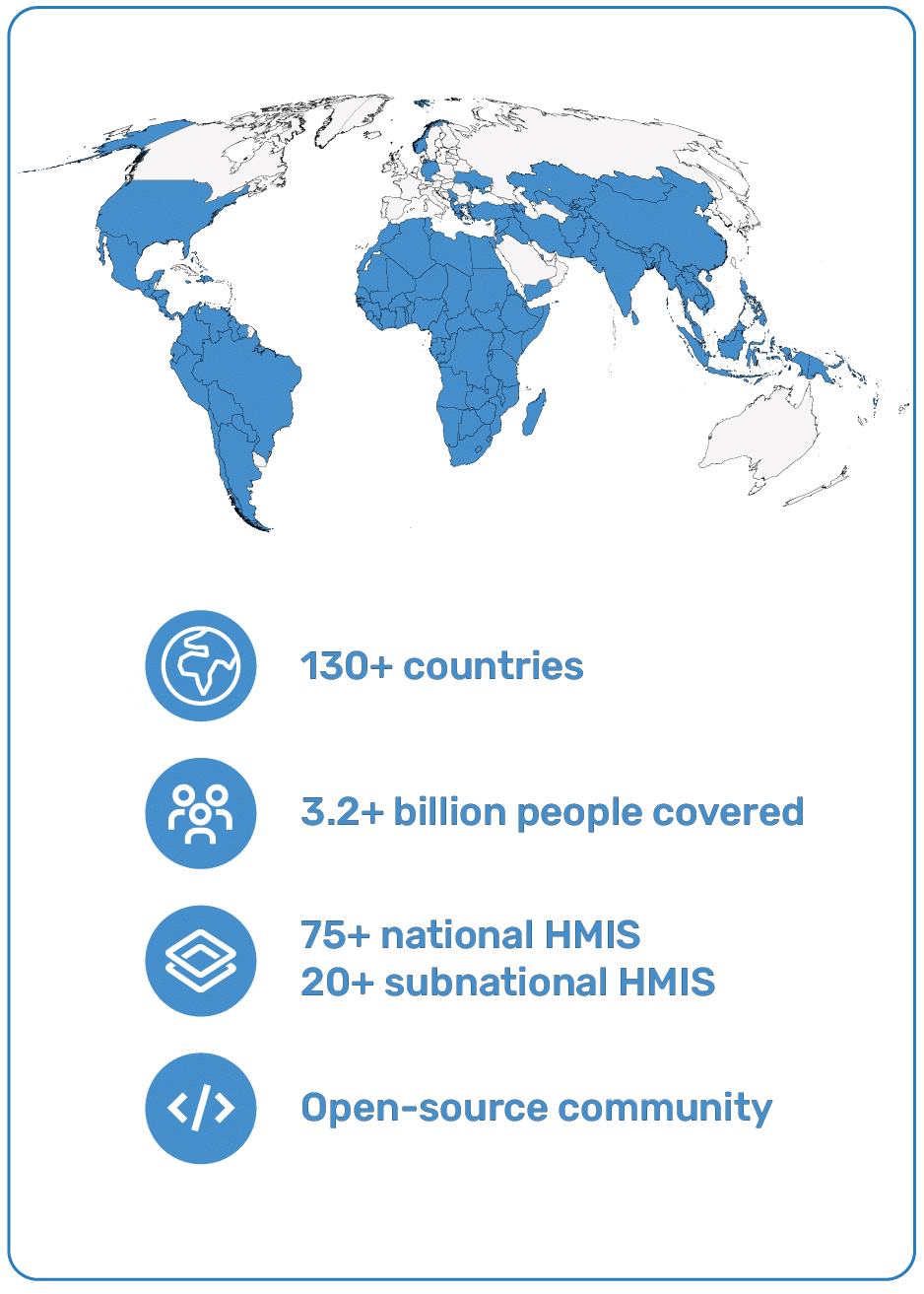
    Today, DHIS2 is the world’s largest HMIS platform, used by 80+ low and middle-income countries (LMICs) as the government-wide system of record for health data. Including NGO-based programs, DHIS2 is in use in more than 100 countries. This has made a significant impact, helping transform public sector governance and use of data to achieve outcomes in health, education and sustainable development goals.

    The DHIS2 core platform is developed and maintained through a global collaboration managed by the HISP Centre at the University of Oslo (HISP UiO), supported by a coalition of partners and investors. HISP is a global network comprised of 24 local HISP groups in LMICs that help ensure that DHIS2 meets the needs of local users and provide long-term, hands-on DHIS2 technical assistance, capacity building, and support to government partners and other organizations.

    Discover DHIS2 & HISP

    Flexible & fully customizable platform

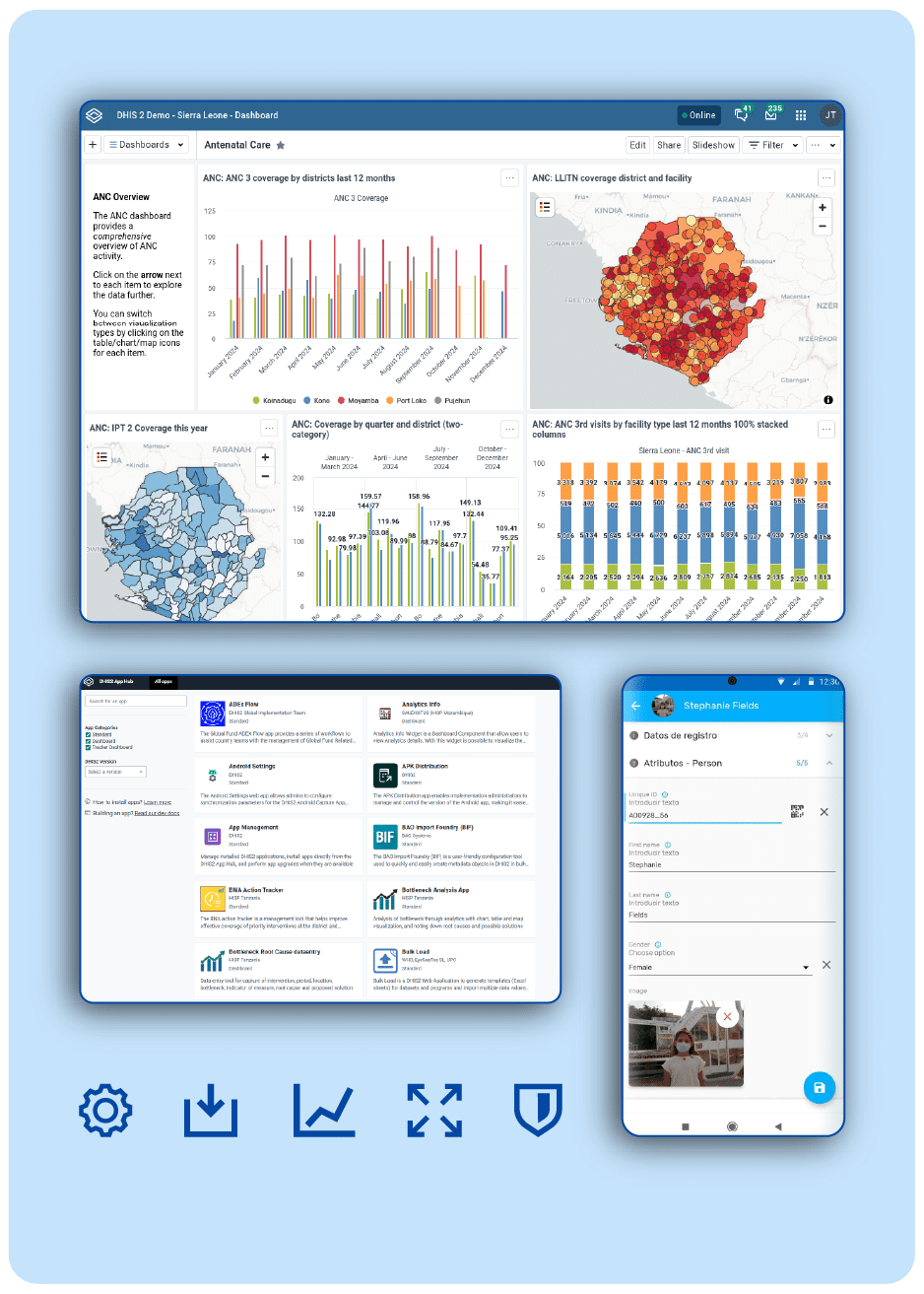
    DHIS2 is a totally customizable platform that supports a variety of data types—including both aggregated values and individual records—making it adaptable to information and program management needs of any sector. Learn more about what you can do with DHIS2:

    • Configure DHIS2 to meet your information needs: Explore
    • Collect data online and offline on mobile, web, and more: Explore
    • Analyze, visualize, and share data with built-in tools: Explore
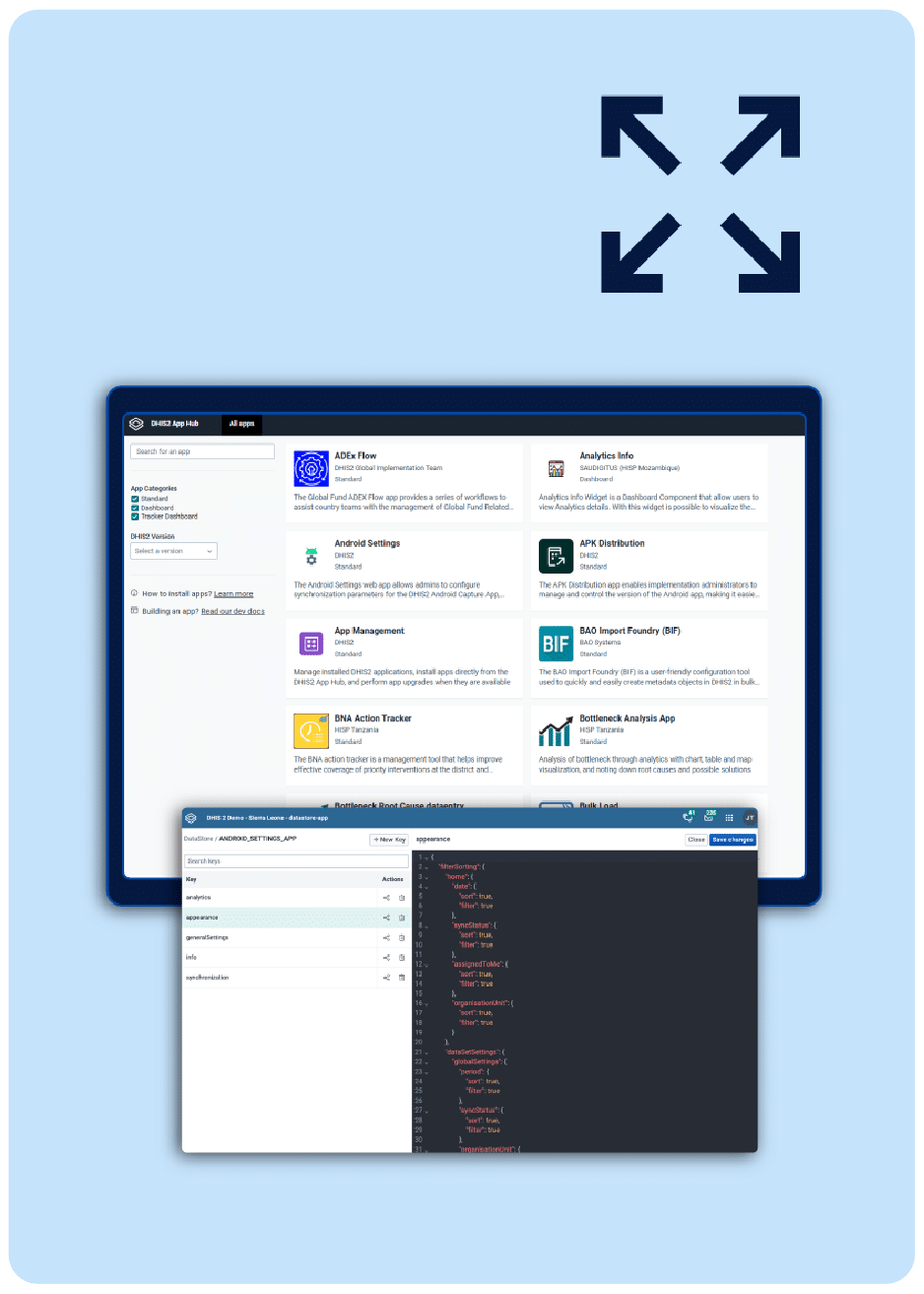
    • Extend DHIS2 functionality and integrate with other systems: Explore
    • Protect your system security and data privacy: Explore

    Explore DHIS2 software features

    Adaptable across programs & sectors

    DHIS2’s flexible design makes it well-suited for a broad range of applications. While it is most well-known for covering routine health reporting at the national, regional, district, facility, and community levels, it is also used in a large variety of other health contexts, including managing electronic patient records, planning and monitoring health campaigns, coordinating disease surveillance and response, supporting community health programs, optimizing health logistics, applying One Health approaches and developing climate-informed health systems.

    Beyond public health programs, DHIS2 is deployed as an information management system for education, agriculture, animal health, nutrition, water and sanitation, and more. This means that in a single country, DHIS2 can serve as the national information management system for several different ministries, offering countries the benefit of scale and the ability to leverage local DHIS2 capacity and infrastructure across sectors.

    DHIS2 is also widely used by NGOs and other international organizations in humanitarian contexts. In addition to satisfying internal reporting needs, these implementations can complement national DHIS2 systems.

    Discover DHIS2 across sectors

    Governed open source & community-driven roadmap

    DHIS2 is released as free and open-source software (FOSS) under the BSD 3-clause license. This means that the application can be downloaded and used without licensing fees, and its source code can be accessed, modified, and redistributed with few restrictions. DHIS2 also features a fully open and well-documented API, making it easy to extend and integrate the platform. All supporting resources, documentation, and training material produced by HISP UiO is also shared under open licenses to facilitate capacity building. DHIS2 has earned international recognition as a digital public good and a key component of digital public infrastructure approaches.

    Major DHIS2 software versions and patches are released on a regular schedule, while updates to DHIS2 applications are available through continuous release. Development and maintenance of the DHIS2 software and supporting resources is coordinated by HISP UiO through a professional team made up of staff based in Oslo and around the world. Software development is guided by a public roadmap that is reviewed and updated in annual cycles that emphasize the needs of stakeholders in LMICs. The DHIS2 software team also regularly solicits input, collects feedback, and responds to potential bug reports through the DHIS2 Community of Practice. From 2026, a new model for collective support and ownership of DHIS2 offers countries and organizations an even greater stake in the DHIS2 platform.

    Explore the DHIS2 software roadmap

    Balancing innovation & stability through dynamic embrace of technology

    From the beginning, DHIS2’s development has embraced new technology while also ensuring that it remains a stable solution that governments and organizations can depend on. The core DHIS2 platform and Android mobile app use up-to-date web and mobile technologies to support data reporting at any level of an organizational system—including an offline mode for areas with limited or unreliable internet access, plus SMS-based data submission—seamless data aggregation, dynamic visualizations, configurable alerts, and much more.

    The robustness and technological flexibility of DHIS2’s architecture helped it become the first governmental information system in sub-Saharan Africa to scale nationally online (in Kenya in 2011). Newer versions of DHIS2 continue to be driven by needs from the field and are designed for implementation across diverse real-world contexts, while also taking advantage of modern technologies to improve software performance. This includes leveraging machine learning and AI through the DHIS2 Chap Modeling Platform and tools to support integration and harmonization of climate, weather, and other geospatial datasets.

    Learn more about DHIS2 architecture

    Designed for extensibility and interoperability

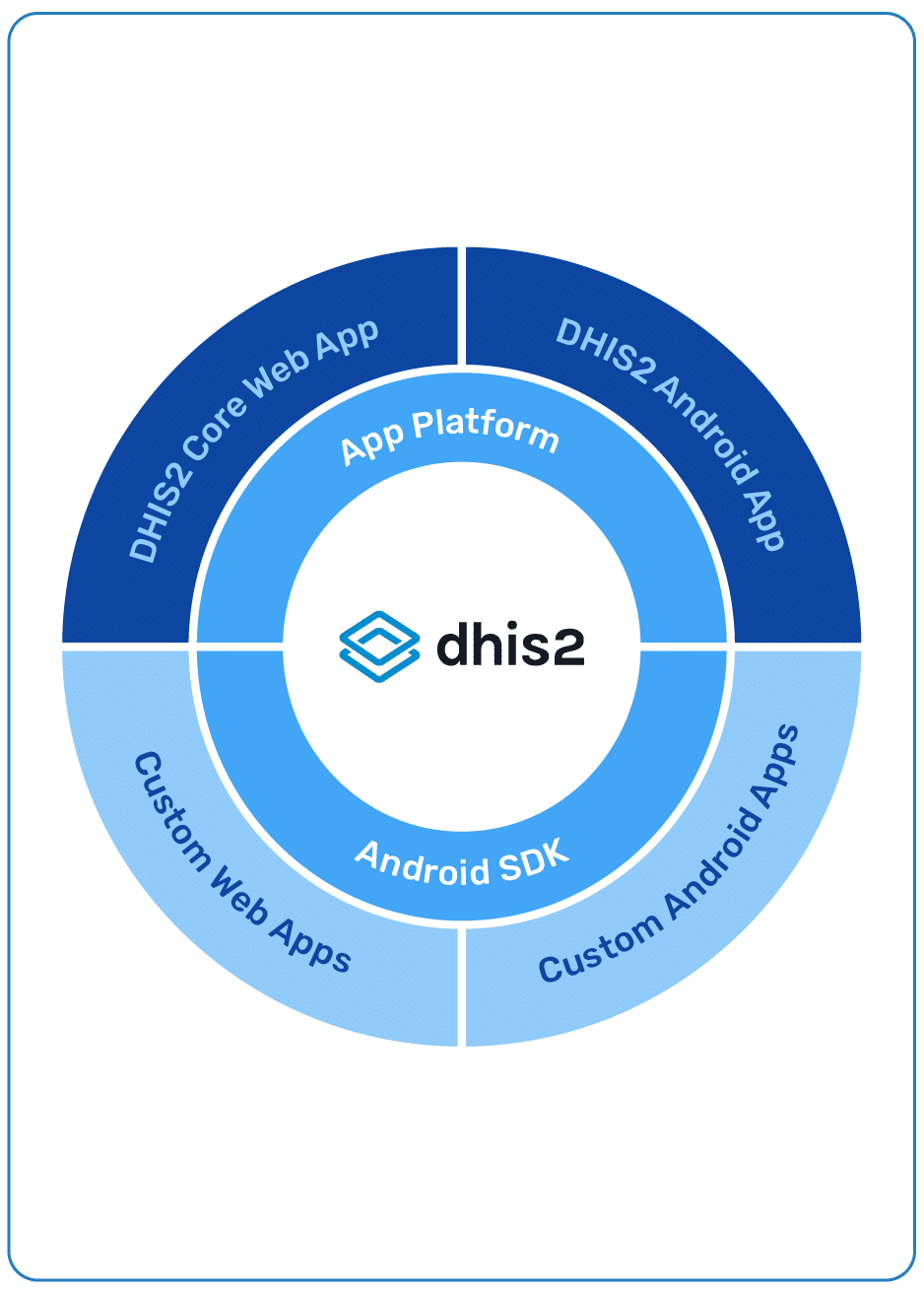
    DHIS2 is designed for extensibility. With its modular, layered architecture and robust API, the DHIS2 platform essentially functions as a data warehouse with more than 60 native applications that pull or push data within the system. This architecture, combined with an open code base and supporting developer resources, makes it easy for developers to enhance their DHIS2 systems with cutting edge technologies and local innovations through custom apps, scripts, and plug-ins.

    DHIS2’s design also supports integration with external software systems and data sources. DHIS2 integration can be achieved through an interoperability layer, middleware, or with a direct API-to-API connection. A range of interoperability solutions already exist, including through generic platforms such as OpenFn, as well as direct connection DHIS2 plug-ins for dozens of other external software systems, such as Tableau. DHIS2 also supports interoperability through compatibility with global standards such as FHIR.

    Learn more about extending DHIS2

    Local ownership for digital & data sovereignty

    While the DHIS2 platform is developed as a global resource, each country or organization using DHIS2 operates its own distinct DHIS2 instance, providing full ownership of both the local system and the data contained within it. This supports digital sovereignty, as countries are able to use and modify the software as they wish, with no vendor lock-in, licensing fees, or significant restrictions. It also supports data sovereignty, since countries can choose DHIS2 deployment and data storage modalities that align with local laws, and restrict system and data access in accordance with local regulations and best practices.

    The DHIS2 team at HISP UiO has no access to local DHIS2 systems or the data within them, unless this is deliberately granted by a local system owner for a specific purpose, such as software troubleshooting or testing. Local HISP groups may be granted access by local system owners to provide advanced technical support, while data may be shared with funding partners and international organizations based on bilateral agreements. Each country and organization is ultimately responsible for managing its own DHIS2 implementation and data.

    Building local capacity for effective information systems

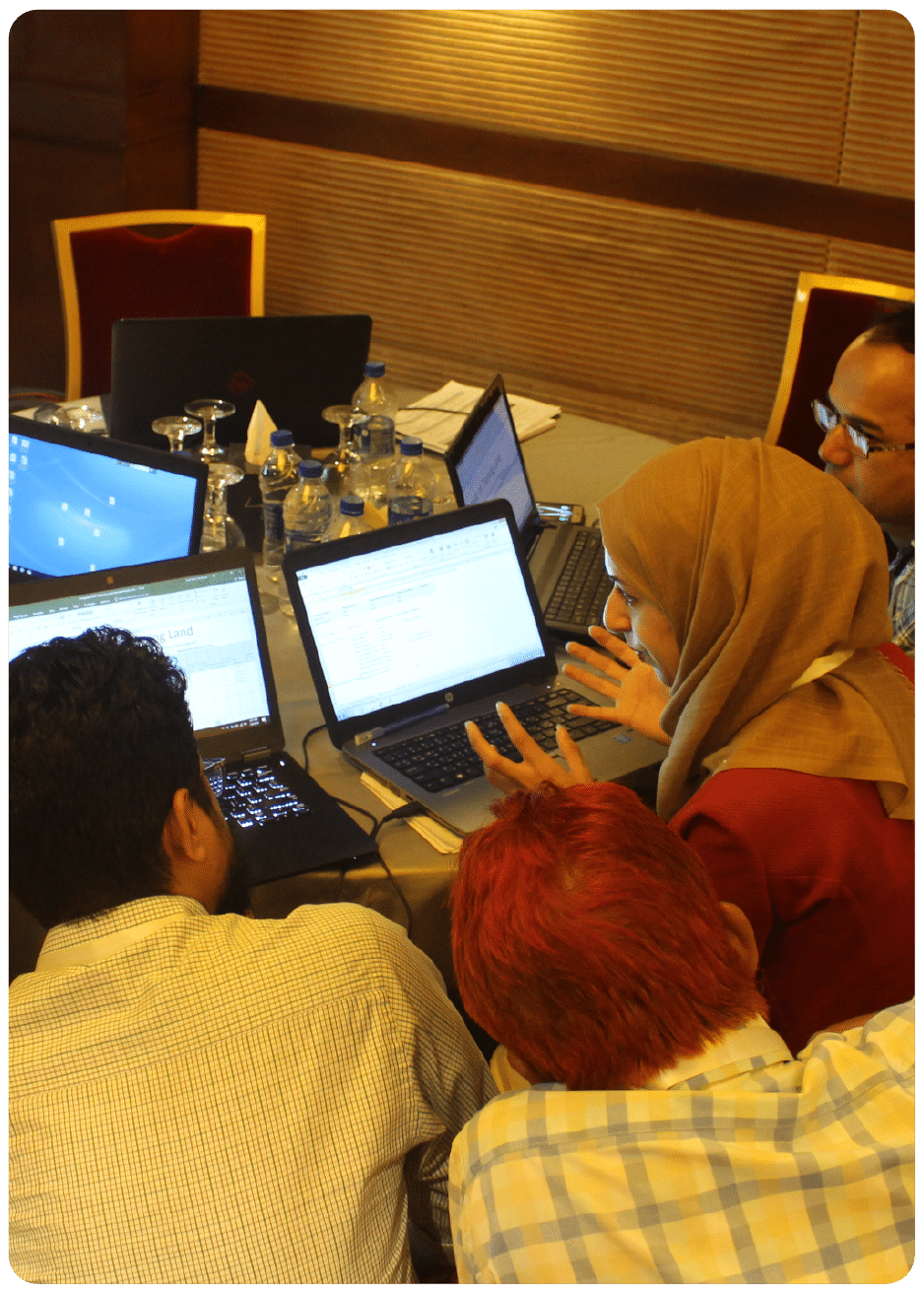
    Sustainable, locally owned DHIS2 implementations depend on strong local capacity to maintain, adapt, and use their systems to enable data-driven decision making. To support this, HISP provides training resources and guidance focused on building strong national DHIS2 core teams through a skills-based learning approach. Through the DHIS2 Academy program—which has had more than 100,000 enrollments since 2011—we offer self-paced Online Academy courses that cover foundational DHIS2 skills and concepts, as well as periodic live Academy courses on more advanced topics. We also coordinate the DHIS2 Community of Practice, an online forum where DHIS2 experts from around the world share best practices and solutions.

    At the regional and national level, local HISP groups in the HISP network provide DHIS2 training for government partners, NGOs, and other organizations. These localized trainings support core team capacity building and can be designed to cascade to end users through a training-of-trainers approach. Through partnerships with ministries of health and other government agencies, HISP groups provide ongoing mentorship and support to national DHIS2 core teams, facilitating the transition to local system ownership.

    HISP also supports informatics capacity building in LMICs through the HISP UiO PhD research program—which has graduated more than 80 PhDs—and Master’s programs, as well as collaboration with local universities and research institutes through the HISP network.

    Learn more about DHIS2 capacity building

    Global adoption and benefits of scale

    The widespread use of DHIS2 in more than 100 countries has created significant benefits of scale for countries, donors, and international organizations. In many countries, there is built-up DHIS2 capacity across the government, from the national level all the way down to community frontline workers, and a proliferation of private- and public-sector service providers with DHIS2 expertise (including local HISP groups), which makes it easier and quicker to deploy DHIS2 in new sectors. Governments can share DHIS2 infrastructure across agencies and programs, reducing operating costs and increasing return on investment. Thanks to the open-source nature of the platform, countries can also adopt best practices and local innovations from other countries and regions, and adapt them to their local context, saving time and money as they reduce the need to “reinvent the wheel.”

    Several international health organizations—including the WHO, which has designated HISP UiO as an official Collaborating Centre since 2017—have also leveraged the worldwide DHIS2 footprint to help disseminate guidance and tools that help countries adopt common standards and best practices. These resources are published by HISP UiO as the DHIS2 Health Data Toolkit. This dissemination pipeline showed its value during the Covid pandemic, when more than 60 countries were able to leverage their existing DHIS2 infrastructure and capacity to rapidly deploy digital tools for disease surveillance and vaccine delivery, contributing to effective pandemic response.

    As countries have adopted the platform, many global donors, international organizations, and humanitarian NGOs have also implemented DHIS2 as their own institutional monitoring and evaluation (M&E) software, enabling them to align with national information systems while meeting their own data management and reporting needs. This helps reduce the need for parallel reporting software and duplication of effort in country, and facilitates coordination across donors on a system strengthening approach for one national system, rather than fragmented investments.

    Explore how DHIS2 is used around the world

    Sustained through collective support

    DHIS2 receives its primary financial support through a partner collective that includes international development agencies, global health organizations, humanitarian NGOs, philanthropic groups and foundations. These funding contributions to HISP UiO can take the form of multi-year investments into the core DHIS2 platform, or limited-term contacts for specific areas of work, including country-level work subcontracted through HISP groups. This provides a diversified base of funding that has enabled HISP to expand and sustain DHIS2 over time, to explore the latest technologies and keep our software secure and up-to-date, to develop a network of experts across countries and regions, and continue to deliver a stable and generic software platform that is available to countries organizations worldwide as a digital public good—without paywalls or licensing fees.

    To respond to changes in the global development finance landscape and increasing emphasis on country-led funding for information systems, HISP UiO has introduced another partnership and sustainment model, the Shared Services Fee and Contributing Partner Program. This provides a simple and transparent structure for countries and organizations that use DHIS2 to contribute to keeping the platform alive and helping shape its future.

    Learn about becoming a DHIS2 partner